
ExamQuark
Getting things ready
Your next step is almost ready.
Your progress
0
Correct
0
Wrong
0%
Accuracy
0 s
Time spent
—
Percentile
Questions by year
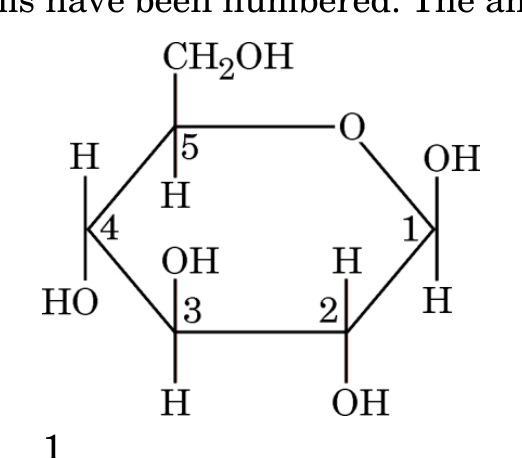 In the Haworth structure of the following carbohydrate, various carbon atoms have been numbered. The anomeric carbon is numbered as :CBSE 12th Chemistry 2025 Set 56/4/1MCQ›64What is meant by essential amino acids ? Why are amino acids amphoteric in nature ?CBSE 12th Chemistry 2025 Set 56/4/12 marks · Notebook›65Ribose and 2-deoxyribose have an important role in biology. Among the most important derivatives are those with phosphate groups attached at the 5 position. Mono-, di- and tri-phosphate forms are important, as well as 3-5 cyclic monophosphates. Purines and pyrimidines form an important class of compounds with ribose and deoxyribose. When these purine and pyrimidine derivatives are coupled to a ribose sugar, they are called nucleosides.
Answer the following questions :
(a) What products would be formed when DNA is hydrolysed ? How is DNA different from RNA with reference to a structure ?
(b) Differentiate between nucleotide and nucleoside.
(c) (i) Mention two important functions of nucleic acid.
OR
(c) (ii) Name the linkage which joins two nucleotides. Name the base that is found in nucleotide of RNA but not in DNA.CBSE 12th Chemistry 2025 Set 56/4/14 marks · Notebook›66(a) Name the type of linkage responsible for the formation of proteins from $\alpha$-amino acids.
(b) Write any two differences between DNA and RNA.CBSE 12th Chemistry 2025 Set 56/5/13 marks · Notebook›67
 Carbohydrates are polyhydroxy aldehydes or ketones that represent enormous structural diversity in terms of the arrangement of atoms in space, resulting in hundreds of stereoisomers. Although the chemical properties of most stereoisomers may not be very different, their metabolic rate and utilization in biological systems is significantly different and known to influence the overall carbohydrate metabolism. Structural variants, which arise due to a different arrangement of atoms in three-dimensional space are known as stereoisomers. The number of stereoisomers can be theoretically estimated by using the formula 2n, where 'n' is the number of stereocenters or asymmetric (chiral) carbon atoms in a molecule. Out of these stereoisomers, there are some structures, which are mirror images of each other, and they are referred to as enantiomers.
Answer the following questions :
(a) Give chemical reactions to show the presence of an aldehydic group and straight chain in glucose.
(b) (i) Define anomers.
OR
(b) (ii) Draw the structure of $\beta$-D-Glucopyranose.
(c) Sucrose is known as invert sugar. Explain.CBSE 12th Chemistry 2025 Set 56/5/14 marks · Notebook›68(a) Name the vitamin whose deficiency causes pernicious anaemia.
(b) Write any two differences between globular and fibrous proteins.CBSE 12th Chemistry 2025 Set 56/5/23 marks · Notebook›69(a) Name the vitamin which is responsible for coagulation of blood.
(b) What is meant by denaturation of protein ? Give an example.CBSE 12th Chemistry 2025 Set 56/5/33 marks · Notebook›70Pyranose ring of glucose is formed due to the reaction between :CBSE 12th Chemistry 2025 Set 56/6/1MCQ›71How do you explain the following ?
(a) Presence of an aldehydic group in glucose.
(b) Presence of five $-\mathrm{OH}$ groups in glucose.CBSE 12th Chemistry 2025 Set 56/6/12 marks · Notebook›72The $\alpha$-amino acids are the building blocks of proteins. All $\alpha$-amino acids exist as zwitter ion due to which they show amphoteric behaviour. All amino acids are joined through peptide bond. Proteins are broadly classified as globular proteins and fibrous proteins. Globular proteins are water soluble, whereas fibrous proteins are not. The complete structure of protein is discussed at four different levels i.e. primary, secondary, tertiary and quaternary structures. Protein loses its biological activity in denatured form.
(a) Define the following :
(i) Peptide linkage (ii) Denatured protein
(b) Why do amino acids show amphoteric behaviour ?
(c) (i) How can you differentiate between Fibrous protein and Globular protein ?
OR
(c) (ii) Write the names of two different secondary structures of proteins.CBSE 12th Chemistry 2025 Set 56/6/14 marks · Notebook›73Furanose ring of fructose is formed due to reaction between :CBSE 12th Chemistry 2025 Set 56/6/2MCQ›74$\alpha$-D-glucose and $\beta$-D-glucose differ from each other with respect to the :CBSE 12th Chemistry 2025 Set 56/6/3MCQ›75Glucose on reaction with hydrogen iodide gives :CBSE 12th Chemistry 2025 Compartment Set 56/S/3MCQ›76Glucose on reaction with $\mathrm{Br}_2$ water gives :CBSE 12th Chemistry 2025 Compartment Set 56/S/1MCQ›77Give one point of difference between the following :
(a) Starch and Cellulose
(b) Primary and Secondary structure of proteinCBSE 12th Chemistry 2025 Compartment Set 56/S/12 marks · Notebook›78Reduce carbohydrates, increase protein to check diabetes, older people may need greater carbohydrates reduction. An average Indian derives 61 – 64% of energy from consumption of food rich in carbohydrates. A study published in the Journal of Diabetes Care has recommended reducing this to 49 – 56% for remission or prevention of Type 2 diabetes, one of the leading cause of death worldwide. Along with reducing carbohydrate intake, the study suggests that one should also increase protein intake up to 14 – 20% of the total energy consumption. Fat should contribute not more than 21 – 27% of the total energy consumption. In simple words, 50% of the plate should consist of fruits and green vegetables, 25% carbohydrates, 25% food rich in protein. Type 1 diabetes is due to deficiency of insulin.
Answer the following questions :
(a) Write any two functions of carbohydrates.
(b) What are monosaccharides ?
(c) (i) Write the name of the deficiency diseases caused due to the lack of Vitamin D.
OR
(c) (ii) Name the hormone which maintains the glucose level within narrow limit in the blood.CBSE 12th Chemistry 2025 Compartment Set 56/S/14 marks · Notebook›79Glucose on reaction with nitric acid gives :CBSE 12th Chemistry 2025 Compartment Set 56/S/2MCQ›80Give one point of difference between the following :
(a) $\alpha$-helix and $\beta$-pleated sheet structure of proteins
(b) Amylose and AmylopectinCBSE 12th Chemistry 2025 Compartment Set 56/S/22 marks · Notebook›81Deficiency of vitamin $\mathrm{B}_1$ causes the disease :CBSE 12th Chemistry 2025 Set 56/7/3MCQ›82Assertion (A) : Vitamin C cannot be stored in our body.
Reason (R) : Vitamin C is water soluble and excreted in urine.CBSE 12th Chemistry 2025 Set 56/7/3MCQ›83Write two differences between DNA and RNA.CBSE 12th Chemistry 2025 Set 56/7/32 marks · Notebook›84$\alpha$-helix structure refers to :CBSE 12th Chemistry 2025 Set 56/7/1MCQ›85Assertion (A) : Vitamin K can be stored in our body.
Reason (R) : Vitamin K is a water soluble vitamin.CBSE 12th Chemistry 2025 Set 56/7/1MCQ›86The two strands in DNA are not identical but complementary. Explain. What products would be formed when DNA is hydrolysed ?CBSE 12th Chemistry 2025 Set 56/7/12 marks · Notebook›87Write the reaction of D-Glucose with the following :
(a) $\mathrm{HCN}$ (b) $\mathrm{Br}_2$ water (c) $(\mathrm{CH}_3 \mathrm{CO})_2 \mathrm{O}$CBSE 12th Chemistry 2025 Set 56/7/13 marks · Notebook›88'Scurvy' is caused due to the deficiency of :CBSE 12th Chemistry 2025 Set 56/7/2MCQ›89Assertion (A) : Maltose is a reducing sugar.
Reason (R) : One of the two glucose units can open to expose free aldehydic group in solution.CBSE 12th Chemistry 2025 Set 56/7/2MCQ›90Write two differences between Amylose and Amylopectin components of starch.CBSE 12th Chemistry 2025 Set 56/7/22 marks · Notebook›91Differentiate between :
(a) Essential amino acids and Non-essential amino acids
(b) Peptide linkage and Glycosidic linkage
(c) Fibrous protein and Globular proteinCBSE 12th Chemistry 2025 Set 56/7/23 marks · Notebook›
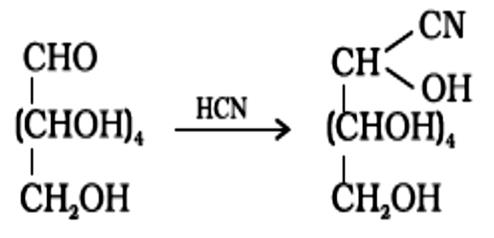 Give the reaction of glucose with hydrogen cyanide. Presence of which group is confirmed by this reaction?CBSE 12th Chemistry Delhi Set 1 - 20232 marks · Notebook›140
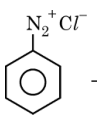 Give reasons for any 3 of the following observations:
(a) Penta-acetate of glucose does not react with hydroxylamine.
(b) Amino acids behave like salts.
(c) Water soluble vitamins must be taken regularly in diet.
(d) The two strands in DNA are complimentary to each other.CBSE 12th Chemistry Delhi Set 1 - 20233 marks · Notebook›141The glycosidic linkage involved in linking the glucose units in amylase part of starch is :CBSE 12th Chemistry 2023 Set 56/1/11 marks · Notebook›142(a) Write chemical reaction to show that open structure of D-glucose contains the straight chain.
(b) What type of linkage is responsible for the formation of protein ?CBSE 12th Chemistry 2023 Set 56/1/12 marks · Notebook›143(a) What are the hydrolysis products of (i) Lactose, (ii) Maltose ?
(b) Give the basic structural difference between starch and cellulose.CBSE 12th Chemistry 2023 Set 56/1/13 marks · Notebook›144Define denaturation of protein. What is the effect of denaturation on the structure of protein ?CBSE 12th Chemistry 2023 Set 56/1/22 marks · Notebook›145Which of the following is a non-reducing sugar ?CBSE 12th Chemistry 2023 Set 56/1/3MCQ›146(a) Write the product when D-glucose reacts with conc. $\mathrm{HNO}_3$.
(b) Amino acids show amphoteric behaviour. Why ?
(c) Write one difference between $\alpha$-helix and $\beta$-pleated structure of protein.CBSE 12th Chemistry 2023 Set 56/1/33 marks · Notebook›147Assertion (A) : Vitamin C cannot be stored in our body.
Reason (R) : Vitamin C is fat soluble and is excreted from the body in urine.CBSE 12th Chemistry 2023 Set 56/5/2MCQ›148Give the reaction of glucose with acetic anhydride. Presence of which group is confirmed by this reaction ?CBSE 12th Chemistry 2023 Set 56/5/22 marks · Notebook›149On hydrolysis, which of the following carbohydrates gives glucose and galactose ?CBSE 12th Chemistry 2023 Set 56/4/3MCQ›150The deficiency of which of the following vitamins causes 'Rickets' ?CBSE 12th Chemistry 2023 Set 56/4/3MCQ›151Assertion (A) : D (+)-Glucose is dextrorotatory.
Reason (R) : Symbol 'D' represents its dextrorotatory nature.CBSE 12th Chemistry 2023 Compartment Set 56/C/1MCQ›152(a) (i) Name any two bases which are common to both DNA and RNA.
(ii) Which vitamin deficiency causes :
(1) Bone deformities in children ?
(2) Pernicious anaemia ?
OR
(b) (i) Why do amino acids show amphoteric behaviour ?
(ii) What happens when D-Glucose is treated with hydroxylamine ?CBSE 12th Chemistry 2023 Compartment Set 56/C/12 marks · Notebook›153Carbohydrates are the major components of all living organisms. Sugars are carbohydrates. The major types of sugars include monosaccharides and disaccharides. The main difference between monosaccharides, disaccharides and polysaccharides is that monosaccharides are monomer of sugars and disaccharides are composed of two monomers, whereas polysaccharides are composed of a large number of monomers. Monosaccharides are single sugar molecules which act as the building blocks of disaccharides and polysaccharides. Disaccharides are also simple sugars. Disaccharides are classified into two groups according to their reducing strength : Reducing and Non-reducing sugars. When a polymer is formed from a monomer, a condensation reaction occurs that forms a glycosidic bond and water molecule is lost. Starch, glycogen and cellulose are examples of polysaccharides. Starch is found in many parts of plant cell and consists of amylose and amylopectin. Glycogen is the major carbohydrate storage product found in humans. It is present in liver, muscles and brain.
Cellulose is the most abundant organic molecule on Earth. It makes up around 50% of all organic carbon.
Answer the following questions :
(a) Name the linkage which connects monosaccharide units in polysaccharides.
(b) Carbohydrates are classified on the basis of their behaviour on hydrolysis. Write the hydrolysis products of sucrose.
(c) Write two differences between Amylose and Amylopectin.
OR
(c) (i) What are reducing sugars ?
(ii) Sucrose is dextrorotatory but the mixture obtained after hydrolysis is laevorotatory. Why ?CBSE 12th Chemistry 2023 Compartment Set 56/C/14 marks · Notebook›154$\beta$-pleated sheet structure in proteins refers toCBSE 12th Chemistry 2023 Set 56/5/3MCQ›155Assertion (A) : The backbone of DNA and RNA molecules is a chain consisting of heterocyclic base, pentose sugar and phosphate group.
Reason (R) : Nucleotides and nucleosides mainly differ from each other in presence of phosphate group.CBSE 12th Chemistry 2023 Set 56/5/3MCQ›156Give the reaction of heating glucose with hydroxylamine. Presence of which group is confirmed by this reaction ?CBSE 12th Chemistry 2023 Set 56/5/32 marks · Notebook›157Assertion (A) : All monosaccharides are reducing sugars.
Reason (R) : They reduce Fehling's and Tollens' reagent.CBSE 12th Chemistry 2023 Compartment Set 56/C/2MCQ›158Assertion (A) : Glucose gets oxidised to six carbon carboxylic acid on reaction with bromine water.
Reason (R) : Glucose contains a ketonic group.CBSE 12th Chemistry 2023 Compartment Set 56/C/3MCQ›159When D-glucose reacts with HI, it formsCBSE 12th Chemistry 2023 Set 56/2/3MCQ›160What are nucleic acids ? Why two strands in DNA are not identical but are complementary ?CBSE 12th Chemistry 2023 Set 56/2/32 marks · Notebook›161Proteins are polymers ofCBSE 12th Chemistry 2023 Set 56/2/2MCQ›162(a) What is the difference between a nucleoside and nucleotide ?
(b) What products would be formed when a nucleotide from DNA containing thymine is hydrolysed ?CBSE 12th Chemistry 2023 Set 56/2/22 marks · Notebook›163On hydrolysis, which of the following carbohydrates gives glucose and fructose ?CBSE 12th Chemistry 2023 Set 56/4/2MCQ›164The deficiency of which of the following vitamins causes Scurvy ?CBSE 12th Chemistry 2023 Set 56/4/2MCQ›165On hydrolysis, which of the following carbohydrates gives only glucose ?CBSE 12th Chemistry 2023 Set 56/3/1MCQ›166Which of the following vitamins is water soluble ?CBSE 12th Chemistry 2023 Set 56/3/1MCQ›167(a) (i) How are carbohydrates stored in animal body ? Mention any one organ where they are present.
(ii) What is the basic structural difference between starch and cellulose ?
OR
(b) Differentiate between :
(i) Peptide linkage and Glycosidic linkage
(ii) Nucleoside and NucleotideCBSE 12th Chemistry 2023 Set 56/3/12 marks · Notebook›168Write the structure of product when D-Glucose reacts with the following : (any three ) $3 \times 1=3$
(a) $\mathrm{HI}$
(b) Conc. $\mathrm{HNO}_3$
(c) $\mathrm{Br}_2$ water
(d) $\mathrm{HCN}$CBSE 12th Chemistry 2023 Set 56/3/13 marks · Notebook›169Helical structure of proteins is stabilized by :CBSE 12th Chemistry 2023 Set 56/3/2MCQ›170A vitamin which plays a vital role in the clotting of blood is :CBSE 12th Chemistry 2023 Set 56/3/2MCQ›171In the ring structure of glucose, the anomeric carbon is :CBSE 12th Chemistry 2023 Set 56/3/3MCQ›172Deficiency of Vitamin B causes :CBSE 12th Chemistry 2023 Set 56/3/3MCQ›173
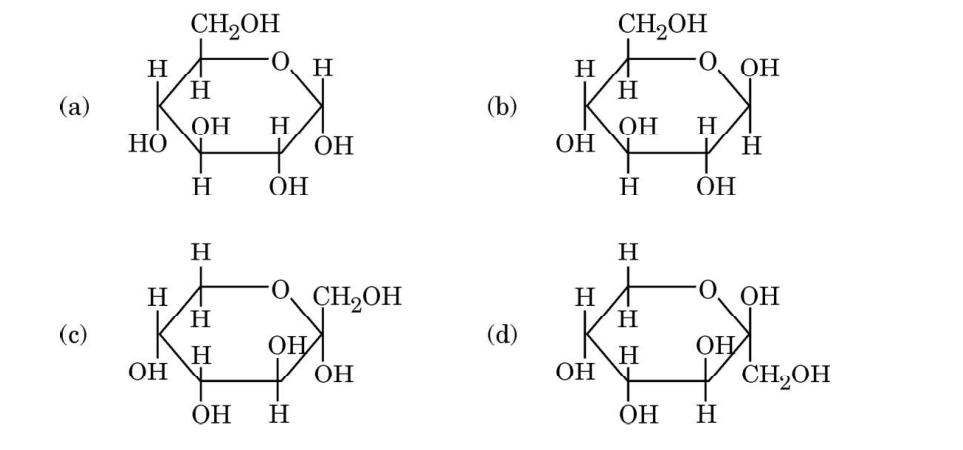 Which of the following structures represents $\alpha$-D-glucose ?CBSE 12th Chemistry 2023 Set 56/4/1MCQ›174Deficiency of which of the following vitamins causes Pernicious anaemia ?CBSE 12th Chemistry 2023 Set 56/4/1MCQ›175Living systems are made up of various complex biomolecules like carbohydrates, proteins, nucleic acids, lipids, etc. Carbohydrates are optically active polyhydroxy aldehydes or ketones or molecules which provide such units on hydrolysis. They are broadly classified into three groups — monosaccharides, oligosaccharides and polysaccharides. Monosaccharides are held together by glycosidic linkages to form disaccharides like sucrose, maltose or polysaccharides like starch and cellulose.
Another biomolecule : proteins are polymers of $\alpha$-amino acids which are linked by peptide bonds. Ten amino acids are called essential amino acids. Structure and shape of proteins can be studied at four different levels i.e. primary, secondary, tertiary and quaternary, each level being more complex than the previous one.
Answer the following questions :
(i) What is the difference between a glycosidic linkage and peptide linkage ?
(ii) Which amino acids are called essential amino acids ?
(iii) What are the common types of secondary structures of proteins ? Write any two forces which stabilise the secondary and tertiary structures of protein.
OR
(iii) Define denaturation of protein with an example. During denaturation which structures of protein lose their biological activity ?CBSE 12th Chemistry 2023 Set 56/4/14 marks · Notebook›